
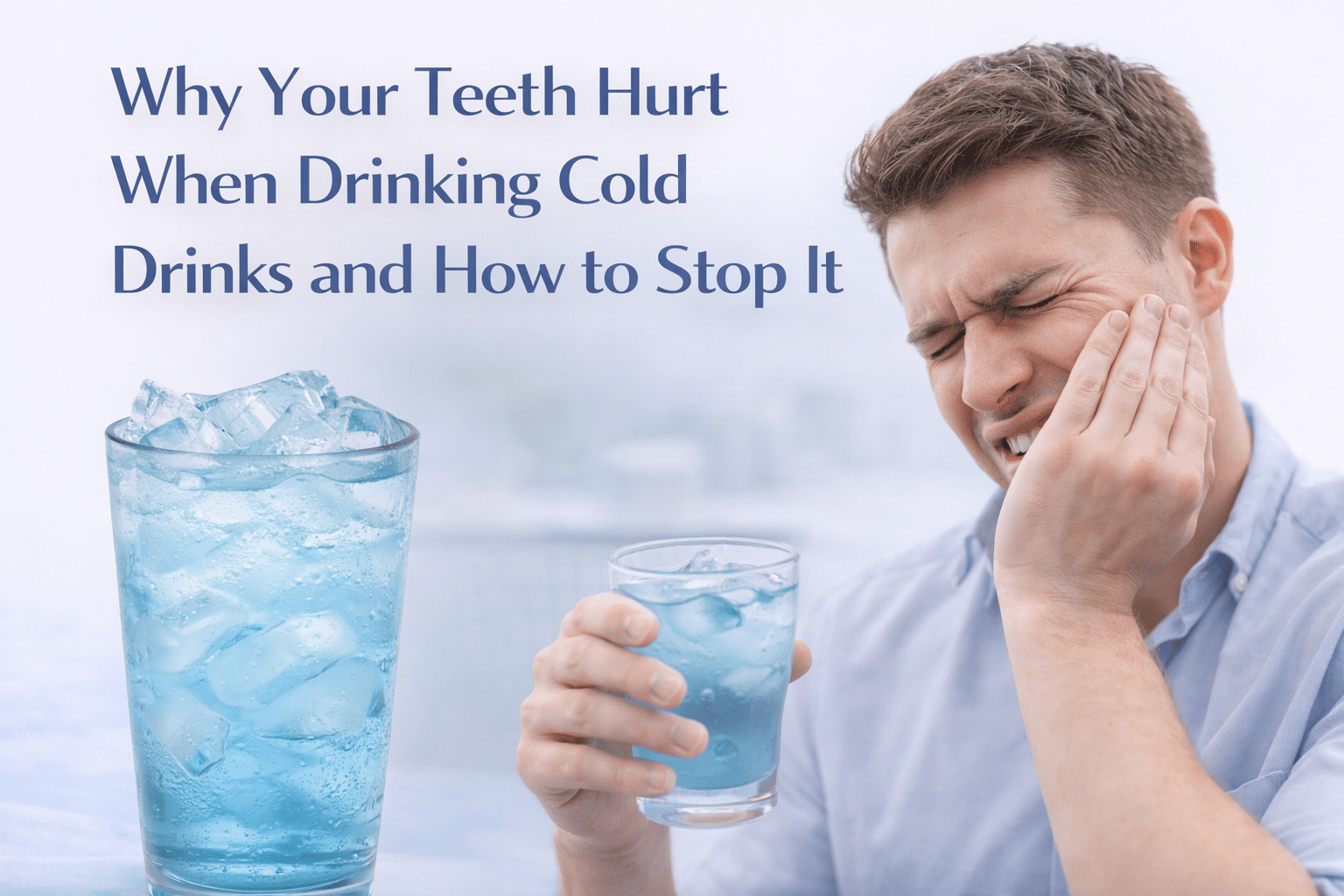
Have you noticed increased tooth discomfort when consuming cold beverages recently? Your body typically gives you this sharp pain as an signal that something is wrong. It is always beneficial to identify the cause of the discomfort rather than ignore it. In this blog, we will discuss the causes of tooth sensitivity and how to treat them.
What Causes Tooth Sensitivity to Cold?
Teeth become sensitive to cold beverages when the outer enamel deteriorates. When this protective layer no longer exists, it exposes dentin (the yellowish part of your tooth that contains tiny tubular canals) that connect with nerve endings. When you’re consuming cold beverages and the cold liquid comes into contact with exposed dentin, the exposed nerve endings send an instantaneous pain message to your brain.
There are several reasons why you may be experiencing tooth sensitivity from cold beverages, such as:
- Erosion of enamel from consuming too many acidic foods and drinks
- Gum recession
- Decay or cavities
- Cracked or chipped teeth
- Having recently had dental work done (whitening or filling)
Since you frequently consume iced drinks in Phoenix due to the heat, you may have developed tooth sensitivity from repeated exposure.
Why the Pain Feels So Sudden
Sensitivity pain feels sharp because it directly affects the nerve inside your tooth.
- Cold temperatures travel quickly through exposed dentin
- The nerve reacts instantly, causing a short, sharp sensation
- The pain usually stops once the stimulus is removed
Understanding the Risk Factors
Living in a dry, hot climate like Phoenix can contribute to dehydration, which may reduce saliva flow. Saliva plays a key role in protecting your teeth.
In addition, visiting a dentist in Phoenix regularly helps identify early signs of enamel wear or gum recession before sensitivity worsens.
Other contributing habits include:
- Brushing too hard
- Using a hard-bristle toothbrush
- Frequent consumption of citrus or soda
- Grinding or clenching teeth
Signs You Should Not Ignore
Rarely do you experience tooth sensitivity; however, if it persists, it may indicate an issue that requires further examination. The following signs indicate there might be a problem that is worthy of examination by your dentist in Phoenix:
- Pain that lasts for longer than just seconds
- Sensitivity to hot or cold
- Gingival (gum) recession
- Teeth with abnormal colours or spots
If you experience any of these symptoms, you may have an issue that requires professional dental assistance.
How to Reduce Tooth Sensitivity
For people with tooth sensitivity, there are some simple steps you can take to reduce the symptoms and discomfort. Using one or more of the following techniques, you can achieve significant results without undergoing complicated dental treatments:
- Use a desensitizing toothpaste regularly
- Change to a soft-bristle toothbrush
- Avoid brushing too hard or aggressively
- Reduce or eliminate acidic foods and drinks
- Rinse shortly after drinking cold beverages
Consistency is the key to getting results using these techniques. Following these steps will strengthen and rebuild enamel over time, thereby reducing nerve exposure.
Professional Treatments That Help
If home care doesn’t improve your condition, dental treatments may be recommended.
- Fluoride treatments to strengthen your enamel
- Bonding to protect portions of teeth that have been exposed
- Gum grafts for severely receded gums
- Sealants or coatings to protect exposed dentine
All of the above procedures will provide you with an increase in your level of comfort and do not involve any procedures that put your health at any risk.
Daily Activities Help To Prevent Sensitivity
It’s always easier to prevent sensitivity than to treat it later.
Focus on:
- Keeping up with your oral hygiene
- Drinking enough liquids to increase saliva production
- Avoiding drinks and foods that have extreme differences in temperature
- Wearing a mouthpiece to protect against damage that can happen when grinding teeth
Additionally, by ensuring you take care of your oral health, including regular dental visits and even orthodontic or cosmetic work, you will indirectly support the overall health of your teeth, gums, and enamel.
A Gentle Reminder for Long-Term Comfort
Tooth sensitivity may seem minor at first, but it often points to underlying changes in your oral health. Addressing it early helps you avoid more complex issues later.
If the discomfort continues, it’s important to have it properly evaluated.
Encanto Family Dental Care focuses on identifying the root cause of sensitivity and guiding patients with practical, patient-focused solutions that support long-term oral health.
When To Seek Help So You Can Eat And Drink Comfortably Again
If drinking very cold things bothers you, you shouldn’t ignore it. You will need to identify the cause before you can find a solution to your problem. You can do this by visiting your dentist in Phoenix for a quick checkup. They will be able to give you the information you need and help you with a treatment plan that may stop any further damage from occurring to your teeth.
Call Encanto Family Dental Care today to schedule an appointment and find out how you can take control of your oral health!
Common Questions People Ask
Why do my teeth hurt only when I drink cold beverages?
Cold sensitivity often occurs when enamel wears down or gums recede, exposing dentin. This allows cold stimuli to reach the nerve quickly, causing sharp discomfort that usually fades once the trigger is removed.
Can tooth sensitivity go away on its own?
Mild sensitivity may improve with better oral care and the use of desensitizing toothpaste. However, persistent discomfort often requires professional evaluation to identify underlying causes such as enamel loss or gum disease.
Is tooth sensitivity a sign of a cavity?
Sometimes, yes. Sensitivity can indicate early decay, especially if it’s localized to one tooth. A dental exam helps confirm whether it’s a cavity or another issue, such as enamel erosion.
How long does sensitivity treatment take to work?
Results vary depending on the cause. Toothpaste may take a few weeks, while professional treatments like fluoride applications can offer quicker relief when applied correctly.
Are sensitive teeth permanent?
Not always. Many cases are reversible with proper care and treatment. Addressing the root cause early increases the chances of reducing or eliminating sensitivity.